# Introduction

Welcome to UXLINK Social Growth Layer’s developer docs.

## What is UXLINK Social Growth Layer?

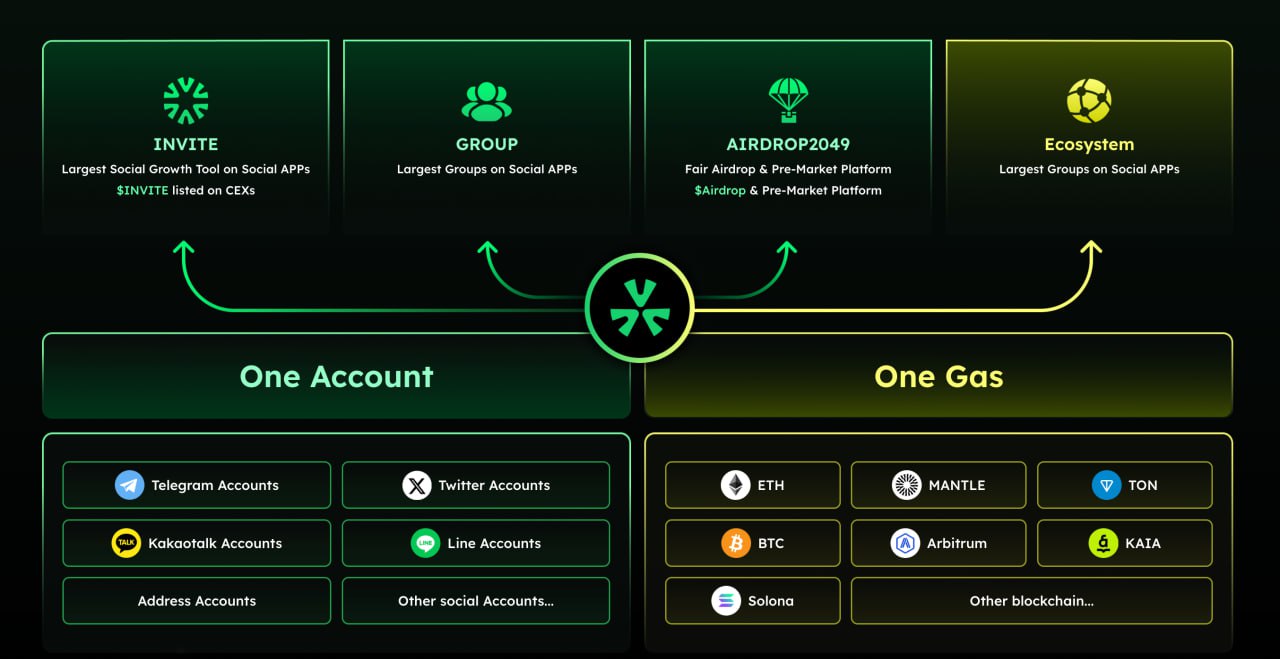
[UXLINK Social Growth Layer](https://docs.uxlink.io/layer/uxlink-social-growth-layer) is a infrastructure Layer which contains chain abstraction, accounts abstraction, universal gas,social protocols, etc. It can provide modularized services for developers and different applications to help third-party applications achieve rapid growth.

<figure><img src="https://1311464564-files.gitbook.io/~/files/v0/b/gitbook-x-prod.appspot.com/o/spaces%2FxmBTbbdo6uuUZP4oH4Qc%2Fuploads%2Fgit-blob-f912b405af6ae934263fba35e464296027e043dc%2Fphoto_2024-11-01_13-41-32.jpg?alt=media" alt=""><figcaption></figcaption></figure>

## Key Tech Products

{% content-ref url="technology/one-account-account-abstraction" %}
[one-account-account-abstraction](https://docs.uxlink.io/layer/technology/one-account-account-abstraction)
{% endcontent-ref %}

{% content-ref url="technology/one-gas-universal-gas-usduxlink" %}
[one-gas-universal-gas-usduxlink](https://docs.uxlink.io/layer/technology/one-gas-universal-gas-usduxlink)
{% endcontent-ref %}

{% content-ref url="technology/social-growth-protocols-social-data-and-universal-points" %}
[social-growth-protocols-social-data-and-universal-points](https://docs.uxlink.io/layer/technology/social-growth-protocols-social-data-and-universal-points)
{% endcontent-ref %}

{% content-ref url="technology/chain-abstraction" %}
[chain-abstraction](https://docs.uxlink.io/layer/technology/chain-abstraction)
{% endcontent-ref %}

## Connect with UXLINK
<table data-view="cards"><thead><tr><th></th><th></th><th></th><th data-hidden data-card-target data-type="content-ref"></th></tr></thead><tbody><tr><td>Website</td><td><a href="https://uxlink.io">https://uxlink.io</a></td><td></td><td><a href="tutorial/how-to-find-exchange-uid-and-withdrawal-address/gate-exchange-ton">gate-exchange-ton</a></td></tr><tr><td>X (Twitter)</td><td><a href="https://x.com/UXLINKofficial">https://x.com/UXLINKofficial</a></td><td></td><td></td></tr><tr><td>Telegram Channel</td><td><a href="https://t.me/uxlink_community">https://t.me/uxlink_community</a></td><td></td><td></td></tr></tbody></table>

<figure><img src="https://1311464564-files.gitbook.io/~/files/v0/b/gitbook-x-prod.appspot.com/o/spaces%2FxmBTbbdo6uuUZP4oH4Qc%2Fuploads%2FR3mefwUgIjsOYERwjHWr%2FGdrQ1BcWsAA-EeL.jpeg?alt=media&#x26;token=e8f81c1e-27ba-4a57-84fc-5e15e0db20bd" alt=""><figcaption></figcaption></figure>


---

# Agent Instructions: Querying This Documentation

If you need additional information that is not directly available in this page, you can query the documentation dynamically by asking a question.

Perform an HTTP GET request on the current page URL with the `ask` query parameter:

```
GET https://docs.uxlink.io/layer/readme.md?ask=<question>
```

The question should be specific, self-contained, and written in natural language.
The response will contain a direct answer to the question and relevant excerpts and sources from the documentation.

Use this mechanism when the answer is not explicitly present in the current page, you need clarification or additional context, or you want to retrieve related documentation sections.
